
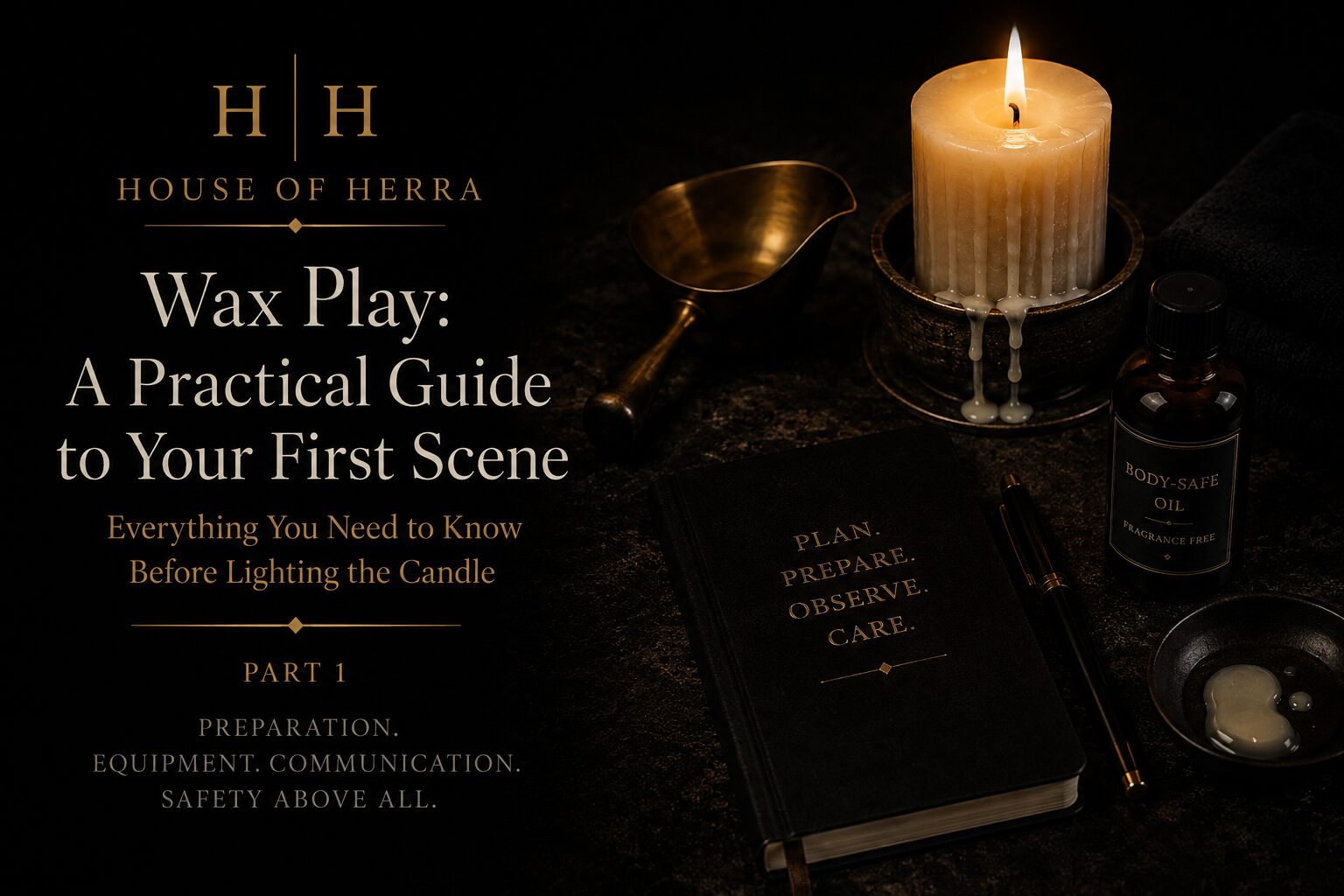
Wax Play - A Practical Guide to Your First Scene Part 1
Preparation, Equipment and Safety Before the First Drop
Wax play occupies a unique place within BDSM.
Unlike many forms of sensation play, it can be intensely intimate without requiring restraint or elaborate equipment. A single candle, used thoughtfully, can create experiences ranging from gentle warmth and quiet relaxation to sharp anticipation and carefully controlled sting.
Its visual simplicity can also be deceptive. A candle appears harmless because it is familiar. Most people have lit thousands throughout their lives. Yet introducing heated wax to another person's skin deserves the same care and respect that we would give any activity involving heat, vulnerability and trust. That does not make wax play inherently dangerous. Nor should it create unnecessary anxiety. Instead, it reminds us that confidence should always be built upon preparation rather than assumption.
The purpose of this guide is not to encourage intensity. It is to help you build a safe foundation from which confidence and experience can develop naturally. There is no prize for producing the most dramatic scene. A successful first wax scene is one where both people finish feeling relaxed, respected, safe and looking forward to exploring again.
Begin With Curiosity, Not Persuasion
Before purchasing candles or preparing your play space, spend a few moments asking some simple questions together.
Are both people genuinely interested?
Healthy BDSM begins with enthusiasm rather than obligation. Curiosity creates exploration. Pressure creates uncertainty. If one person is hesitant, allow that hesitation to exist without trying to overcome it. Wax play will still be available another day.
Have you discussed what you both expect?
People often imagine very different experiences when they hear the words wax play. One person may picture slow, relaxing drops of warm wax. Another imagines artistic trails running across the skin. Someone else expects a sharp sting. Another expects almost no discomfort at all. Taking five minutes to discuss these expectations before a scene dramatically reduces disappointment and helps ensure that both partners are imagining roughly the same experience.
Are there any medical considerations?
Skin responds differently from person to person. Discuss anything that could influence sensation, healing or comfort, including:
- Allergies
- Skin conditions
- Recent sunburn
- Open wounds
- Bruising
- Medication affecting sensation
- Reduced circulation
- Medical conditions influencing pain perception
If either person is uncertain whether wax play is appropriate, choosing not to proceed is always a perfectly acceptable decision. Good judgement is never disappointing.
Preparing Before You Need To
One of the easiest ways to create a calm scene is to remove unnecessary decisions before lighting the candle. Preparation allows both people to focus on each other instead of searching for forgotten equipment halfway through the experience.
Essential Equipment
Prepare everything before beginning.
- ✓ Body-safe wax play candle(s)
- ✓ Reliable lighter or matches
- ✓ Stable candle holder
- ✓ Fireproof surface
- ✓ Protective floor covering
- ✓ Towels
- ✓ Suitable oil for wax removal (optional)
- ✓ Drinking water
- ✓ Comfortable blanket for aftercare
None of these items are complicated. Together, they remove a surprising amount of distraction once the scene begins.
Recommended Safety Equipment
Most scenes never require emergency equipment. That is precisely why it should already be available. Having it nearby creates confidence rather than anxiety. Recommended items include:
- ✓ Cool damp cloth
- ✓ Basic first aid kit
- ✓ Fire blanket
- ✓ Suitable fire extinguisher
- ✓ Easy access to running water
Good preparation is almost invisible during a successful scene. Its value only becomes apparent when something unexpected occurs.
Choosing the Right Candle
Perhaps no aspect of wax play causes more misunderstanding than candle selection. Many newcomers assume that any household candle can be used safely. Unfortunately, that assumption is incorrect. Candles are designed for different purposes. Many decorative candles prioritise appearance, fragrance, burn time or decorative wax finishes rather than safe contact with skin.
For wax play, choose candles specifically manufactured for body use whenever possible. These products are formulated to provide enjoyable sensation while reducing unnecessary risk.
Suitable choices generally include:
- Purpose-made wax play candles
- Certain massage candles designed for skin contact
- Carefully formulated low-temperature wax blends
Decorative candles should never be assumed to be suitable.
Many are designed with characteristics that make them inappropriate for wax play, including:
- Extended burn temperatures
- Hard wax formulations
- Heavy fragrances
- Decorative additives
- Dense pigments
Just because a candle is sold commercially does not mean it belongs anywhere near another person's skin.
Simplicity Is Often Better
Fragrance and colour can certainly make candles more attractive. They can also introduce unnecessary variables. Highly scented candles may contain ingredients capable of irritating sensitive skin. Similarly, decorative dyes can occasionally stain skin or fabrics and may increase the likelihood of irritation for some people.
For a first experience, simpler is usually better. A plain body-safe candle allows both people to concentrate on communication and sensation instead of wondering whether an unexpected reaction has been caused by unnecessary additives.
Preparing Your Play Space
A well-prepared environment quietly supports the scene without drawing attention to itself. Every small detail removed beforehand becomes one less distraction later.
Protect the Floor
Wax behaves exactly as gravity expects. It drips. It runs. It lands somewhere. Removing wax from a protective sheet is considerably easier than removing it from carpets or upholstered furniture. A waterproof sheet, old blanket or dedicated play covering is usually sufficient.
Think About Furniture
Wax does not always land where you expect. Consider how it may travel before the first drop leaves the candle. Small adjustments to positioning beforehand can prevent a surprising amount of unnecessary cleaning afterwards.
Maintain Enough Light
Atmosphere matters. So does visibility. You should always be able to observe the skin clearly throughout the scene. Romantic darkness should never prevent you from recognising irritation, unexpected reactions or signs that your partner needs you to pause.
Ensure Comfortable Ventilation
Most rooms require nothing more than normal ventilation. Avoid small enclosed spaces where warmth, smoke or fragrance can become uncomfortable. Fresh air helps everyone remain relaxed.
Remove Fire Hazards
Before lighting the candle, take a moment to secure anything that could accidentally come into contact with an open flame.
Pay particular attention to:
- Long hair
- Loose clothing
- Scarves
- Jewellery
- Decorative fabrics
These are easy details to overlook precisely because the scene itself feels calm.
Before Lighting the Candle
Once everything is prepared, pause.
Talk. Even a short conversation contributes enormously to confidence. Some useful questions include:
- Which areas feel comfortable receiving wax?
- Are any areas completely off-limits?
- Are you hoping for warmth, sting or something in between?
- Would you like to build gradually?
- Which safeword system will we use?
- How would you like to pause the scene if needed?
These discussions rarely take more than a few minutes. Their value continues throughout the entire experience.
Quick Pre-Scene Checklist
Before lighting the candle, take one final moment to confirm:
- ☐ Consent has been clearly established.
- ☐ Boundaries have been discussed.
- ☐ Safewords have been agreed.
- ☐ Equipment is prepared.
- ☐ Safety equipment is within reach.
- ☐ The play area is protected.
- ☐ Potential distractions have been removed.
- ☐ Mobile phones are silenced unless required for emergencies.
- ☐ Both people feel calm, comfortable and genuinely ready to begin.
Continue to Part 2
In the second part of this practical guide, we move from preparation into practice.
Topics include:
- Body mapping for beginners
- Suitable areas for a first wax scene
- Areas requiring additional caution
- Step-by-step guidance through your first scene
- Drip height and pouring technique
- Reading your partner's responses
- Communication during active play
- Common beginner mistakes
- Wax removal and cleanup
- Aftercare
- A pre-scene checklist
More in this series:
- The Quiet Art of Wax Play Part 1 - More Than Melted Wax
- The Quiet Art of Wax Play Part 2- Reading the Flame, Reading the Person
- Understanding Heat: The Science That Makes Wax Play Safe
- Beyond the Flame: Judgement, Technique and Responsibility in Wax Play
- Wax Play: A Practical Guide to Your First Scene (Part 1)
- Wax Play: A Practical Guide to Your First Scene (Part 2)
- Wax Play: A Practical Guide to Your First Scene (Part 3)