

Trust & Communication
Every meaningful power exchange is built on communication. Not the dramatic conversations that happen before a first scene, but the quiet, continuous dialogue that exists before, during and long after any act of dominance or submission.
Trust is not something that is negotiated once and assumed forever. It is created through consistency, honesty and the willingness to listen, especially when the conversation is difficult. Without trust, authority becomes uncertainty and surrender becomes risk. Trust is earned over time, not granted by title alone.
Within House of Herra, communication is understood as far more than words. It lives in body language, hesitation, silence, routine, observation and the confidence to ask questions that may not have comfortable answers. A raised eyebrow, a change in breathing or an unexpected pause often communicates more than an entire conversation if we are prepared to notice it.
Healthy D/s relationships depend upon transparency. Limits should be spoken. Expectations should be understood. Desires deserve expression without fear of judgement. Equally important is the ability to admit uncertainty, change direction and acknowledge when something no longer feels right. Honest communication is not a weakness; it is the foundation that allows vulnerability to exist safely.
This collection explores the many conversations that shape ethical power exchange. It examines how trust is earned rather than demanded, why consent is an ongoing dialogue instead of a single agreement, and how conflict, misunderstanding and repair can strengthen relationships when approached with maturity and compassion.
You will find essays exploring the language of care, the importance of active listening, non-verbal communication, aftercare conversations, emotional safety and the responsibility both Dominants and submissives carry in creating relationships where each person feels heard, respected and understood.
Whether you are entering your first dynamic or reflecting on years of shared experience, these essays invite you to slow down and listen more carefully, not only to your partner, but also to yourself.
Because communication is not simply the exchange of information. It is the practice through which trust is built, maintained and restored. It is how authority becomes reassuring rather than intimidating, and how submission becomes an act of confidence rather than uncertainty.
Every conversation has the potential to deepen understanding. Every moment of genuine listening has the potential to strengthen a relationship.
That is why trust and communication are not supporting elements of BDSM.
They are the structure upon which everything else is built.
More in this series:
- Reading the Person, Not the Script
- The Space Between Us
- The Quiet Privilege of Bearing Witness
- The Weight We Never Speak Of
- The Space Between the Plan and the Person
- The Quiet Thread That Holds Everything Together
- The Quiet Words That Shape a Dynamic
- The Quiet Conversation of the Hand
- The Person Before the Partner
- When the Same Hands Tell Two Different Stories
- The Care We Name, the Stories We Assume
- Finding the Person Before the Role

Reading the Person, Not the Script
There is a moment, somewhere near the beginning of every journey into dominance, when the title feels far larger than the person carrying it.

The Quiet Thread That Holds Everything Together
Presence in BDSM scenes is sustained attention: the willingness to remain responsive when technique fades and unexpected emotions appear.

The Space Between the Plan and the Person
Adaptive BDSM scenes preserve preparation while allowing presence, communication and connection to reshape the plan around the people involved.
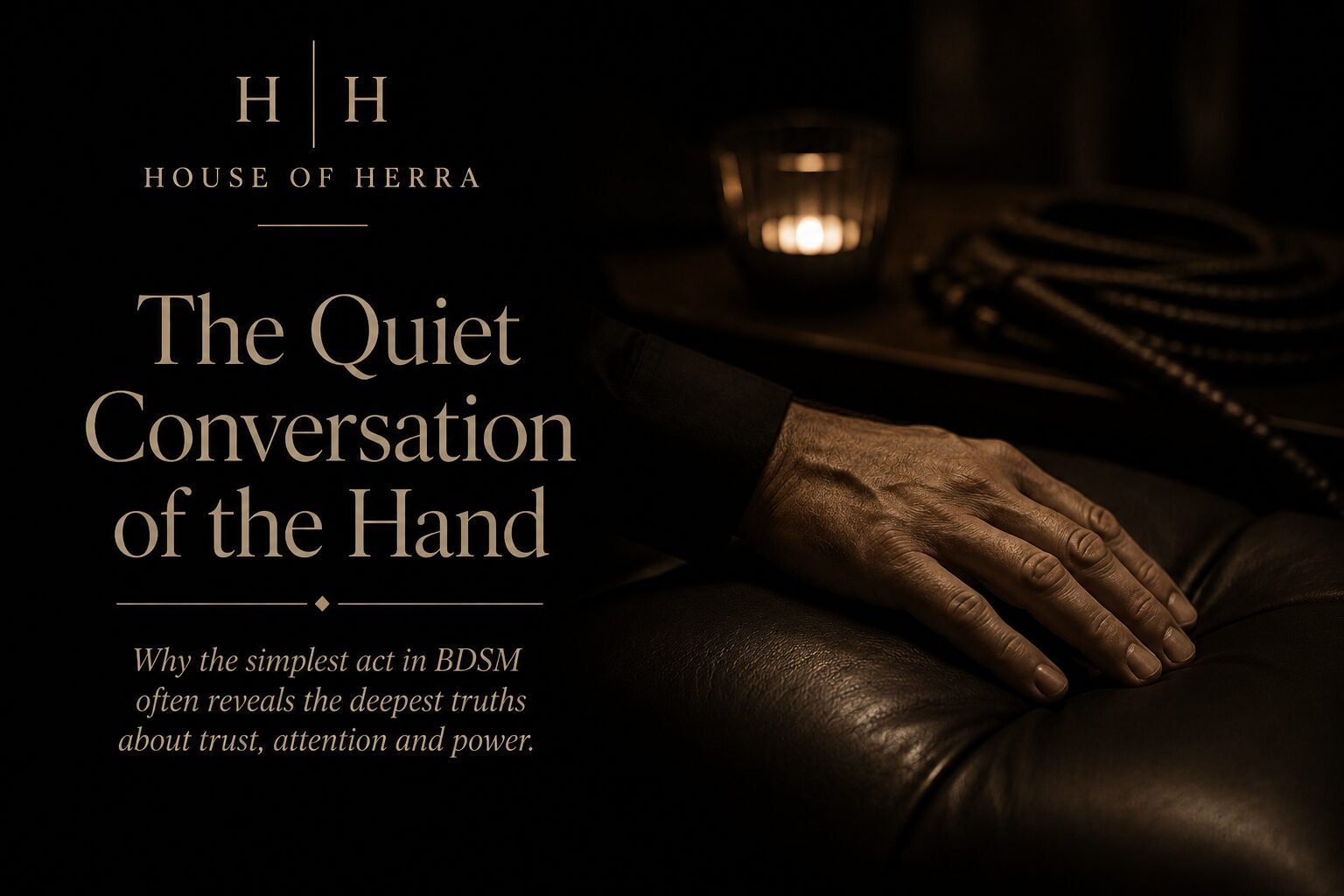
The Quiet Conversation of the Hand
Erotic spanking becomes a conversation through rhythm, restraint and attention, revealing how trust and power move between two people.
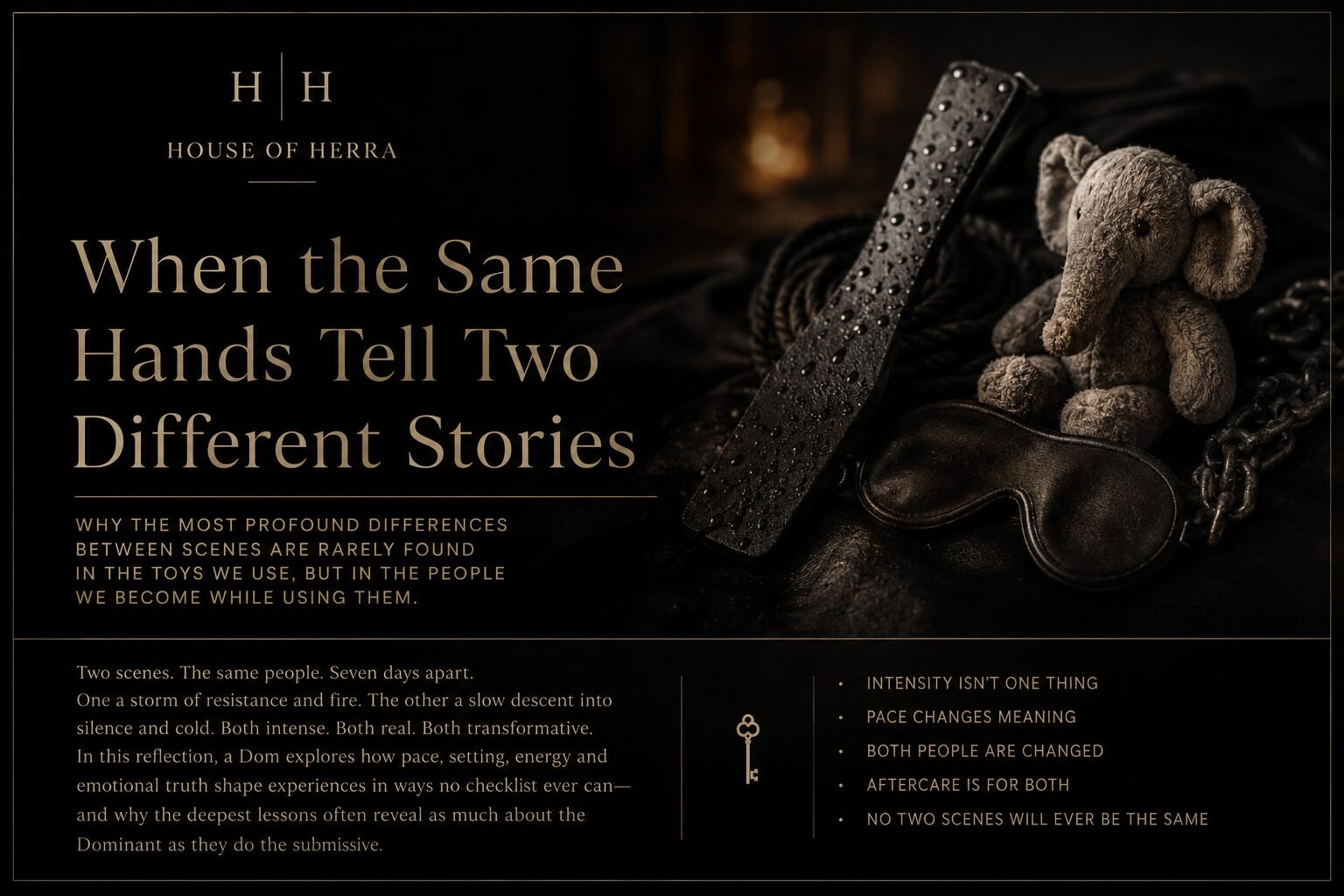
When the Same Hands Tell Two Different Stories
Responsive BDSM scenes change with the people creating them; the same hands and implements can tell entirely different emotional stories.

The Quiet Words That Shape a Dynamic
Why the greatest challenge for a Dominant is rarely control—it is learning how to keep wonder alive without losing sight of the person entrusted to them.

The Person Before the Partner
Why the greatest challenge for a Dominant is rarely control—it is learning how to keep wonder alive without losing sight of the person entrusted to them.

The Weight We Never Speak Of
The greatest burden of ethical dominance is not authority itself, but the quiet responsibility that continues long after every scene has ended.

The Care We Name, the Stories We Assume
DD/lg is often misunderstood because people mistake labels for relationships. This essay explores care, authority, trust and the meaning behind the language.

The Quiet Privilege of Bearing Witness
Watching a BDSM scene is a privilege, not participation. Good etiquette begins with respect, restraint and understanding the responsibility of witnessing.

Finding the Person Before the Role
Finding the right Dominant begins with knowing yourself, building trust slowly, and recognising the person before the role.